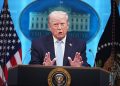
WASHINGTON, D.C. — January 7, 2026 — In a sweeping shift in U.S. foreign policy, President Donald J. Trump today signed a Presidential Memorandum directing all federal agencies to begin withdrawing the United States from 66 international organizations, conventions, and treaties that the administration says are no longer aligned with American interests. Follow this link to check the list of all organizations that USA has no longer interests in them:https://www.whitehouse.gov/presidential-actions/2026/01/withdrawing-the-united-states-from-international-organizations-conventions-and-treaties-that-are-contrary-to-the-interests-of-the-united-states/


Under the new directive, the United States will cease participation in and funding for 35 non-United Nations bodies and 31 United Nations entities identified as operating “contrary to the interests of the United States.” The list includes global forums on climate, migration, science, gender equality, and peacebuilding, igniting immediate debate both at home and abroad.
International Union for Conservation of Nature IUCN is also included
Policy Shift Under “America First” Banner
The White House said the decision follows a comprehensive review ordered by the president last year. According to the administration, many of the affected organizations advance “radical climate policies, global governance, and ideological programs that conflict with U.S. sovereignty and economic strength.” Officials argue that withdrawing will save taxpayer dollars and refocus U.S. engagement on entities that directly further American priorities.
Among the non-UN organizations from which the U.S. will withdraw are the Intergovernmental Panel on Climate Change (IPCC) — the world’s leading scientific body on climate change — and the International Renewable Energy Agency (IRENA), both central to global environmental cooperation.
On the United Nations side, the U.S. will pull out of the UN Framework Convention on Climate Change (UNFCCC), the principal treaty underpinning global climate negotiations, as well as bodies that address gender equality, trade development, and peacebuilding efforts.
Domestic and Global Reactions
Supporters of the move laud it as a bold defense of U.S. sovereignty and fiscal responsibility. Secretary of State Marco Rubio hailed the decision as a way to avoid “subsidizing globalist bureaucrats” whose agendas diverge from U.S. interests.
However, critics warn of significant diplomatic fallout. Climate scientists and foreign policy experts argue that withdrawing from key climate and development forums will diminish U.S. influence and hamper global cooperation on urgent issues such as climate change and humanitarian crises. Leaders of several affected organizations have said the U.S. must still follow formal exit procedures, suggesting that implementation could take months or longer.
International reaction has been swift. Some foreign officials expressed concern that the move erodes the United States’ longstanding role in multilateral diplomacy, while others signaled readiness to fill the vacuum in global initiatives.
What Comes Next
The memorandum charges U.S. executive departments and agencies with executing the withdrawals “as soon as possible,” with the Secretary of State tasked with issuing implementation guidance. Legal experts say certain treaty exits may require notice periods or additional procedural steps, particularly for agreements previously ratified by the U.S. Senate.
As the world absorbs this historic realignment, the broader implications for U.S. diplomacy, international cooperation, and global leadership are just beginning to emerge. Observers predict that trade partners, climate allies, and security partners will closely watch how Washington navigates this new chapter in its foreign relations.