United States President, Donald Trump has announced the capture of Venezuelan President Nicolas Maduro.
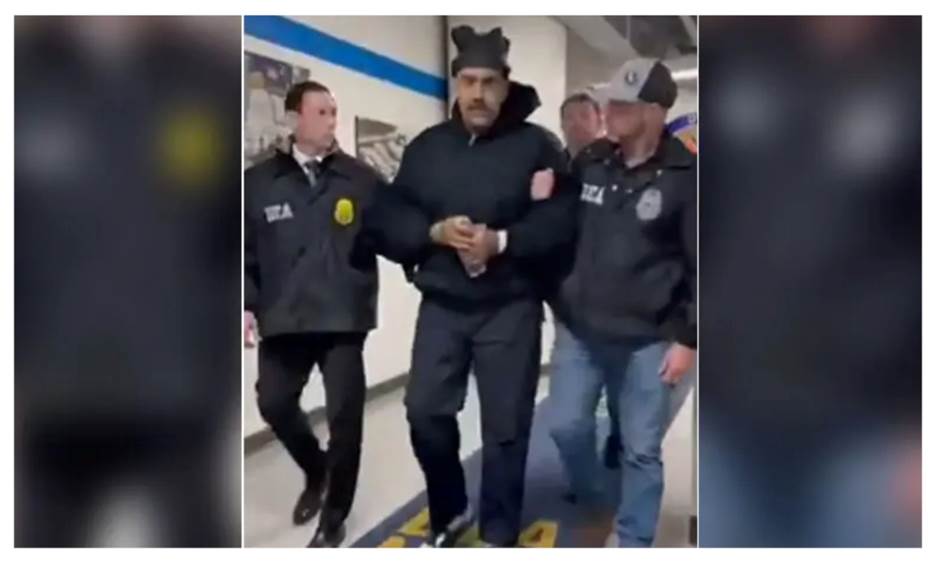
Venezuela’s President Nicolás Maduro, now detained in New York after a U.S. operation that has shocked the international community.
In an unprecedented and highly controversial international operation, Venezuelan President Nicolás Maduro has been captured by United States special forces and is now being held in a federal detention facility in New York City, authorities confirmed Saturday evening.
Maduro, who has led Venezuela since 2013, was seized during a pre-dawn U.S. military operation in Caracas dubbed “Operation Absolute Resolve,” involving air strikes on key Venezuelan military targets and the deployment of elite U.S. forces. According to U.S. officials, the president and his wife, Cilia Flores, surrendered without significant resistance and were transported out of Venezuela aboard U.S. military assets.
After landing at Stewart Air National Guard Base in New York, Maduro was processed through the U.S. justice system and transferred to the Metropolitan Detention Center (MDC) in Brooklyn, a high-security federal jail where he now awaits his first appearance before a federal judge.
U.S. authorities have long sought Maduro’s arrest under a 2020 federal indictment in the Southern District of New York, which accuses him and several close associates of narco-terrorism, cocaine importation conspiracy and weapons offenses related to alleged trafficking networks.

U.S. Statement and Justification
Speaking from Washington, U.S. President Donald Trump declared the operation a success and said the United States would “run Venezuela until such time as we can do a safe, proper and judicious transition.” Trump justified the unprecedented incursion with claims that Maduro’s regime was deeply involved in narcotics trafficking and posed serious threats to U.S. security.
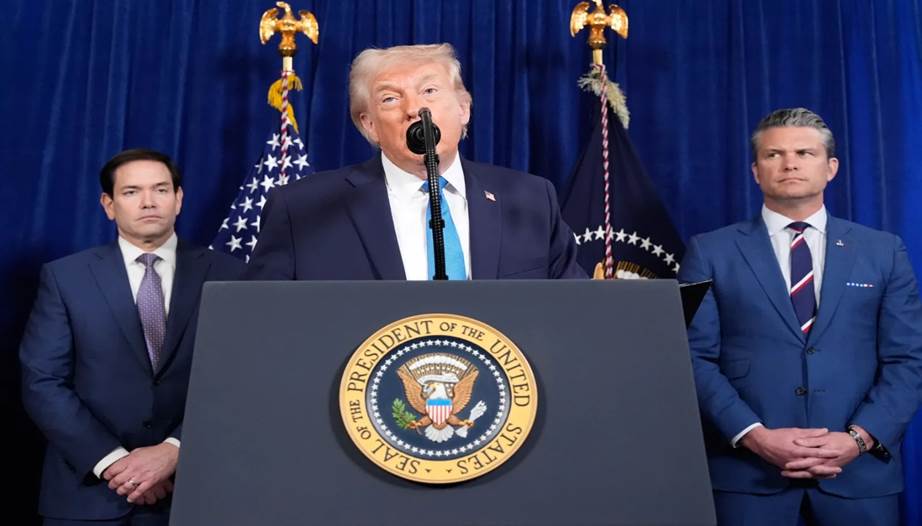
United States President, Donald Trump has announced the capture of Venezuelan President Nicolas Maduro.
Trump also suggested that U.S. energy companies could help rebuild Venezuela’s oil infrastructure, potentially tapping into the nation’s vast crude reserves long controlled by state-run PDVSA.
Venezuela’s Reaction
Venezuelan officials denounced the raid as an illegal act of military aggression and a kidnapping, rejecting Maduro’s removal as unconstitutional. Vice President Delcy Rodríguez, citing Venezuela’s top court, immediately assumed powers as interim president, though her authority is contested both domestically and internationally.
Caracas was reported eerily quiet following the raid, with heavy police presence around government buildings. Venezuelan state media described the U.S. actions as a blatant violation of national sovereignty.
International Response
The operation has drawn widespread global criticism, with many governments and legal experts questioning the legality of a foreign military detaining a sitting head of state without clear United Nations authorization. Critics warn this sets a dangerous precedent under international law, potentially undermining norms of sovereignty and diplomatic immunity.
Even within the United States, political leaders are sharply divided. Some members of Congress argue the president overstepped constitutional authority by ordering military action without legislative approval.
Public Reaction
Among Venezuelan diaspora communities in the U.S., celebrations erupted as news of Maduro’s detention spread. However, large protests have also taken place in Caracas and other cities in solidarity with the ousted leader and against perceived foreign occupation.
Political Analysis: Implications of Maduro’s Capture
1. U.S.–Latin America Relations
This operation represents the most direct U.S. intervention in Latin America in decades, drawing comparisons with the 1989 U.S. invasion of Panama. While Washington argues it is combating narcotrafficking and corruption, critics see it as geopolitical overreach that could strain diplomatic ties across the region.
2. Rule of Law vs. Sovereignty
The legal basis for detaining a foreign head of state on U.S. soil is untested at this scale. Though Maduro was indicted years earlier, such military enforcement of domestic criminal charges risks undermining international norms on sovereign immunity, potentially triggering reciprocal actions by other nations in future disputes.
3. Venezuela’s Internal Stability
With Maduro removed and an interim government declared, the power dynamics in Venezuela remain volatile. The military’s loyalties are unclear, and domestic factions may contest Rodríguez’s claim to leadership. The U.S. plan to administer the country, even temporarily, could further fuel internal conflict.
4. U.S. Political Fallout
Domestically, the Trump administration faces intense scrutiny. Supporters praise the decisive action against alleged criminal governance, while opponents criticize the lack of congressional authorization and warn of an unconstitutional precedent that could embroil the U.S. in a prolonged foreign commitment.
5. Long-Term Regional Impact
The capture may embolden opposition forces in Venezuela and other authoritarian governments in the region. But it could also leave a power vacuum that invites external players — including Russia and China, traditional Maduro allies — to deepen their involvement in Latin America.